

The American Bald Eagle Is Back - But Don't Credit the Endangered Species Act
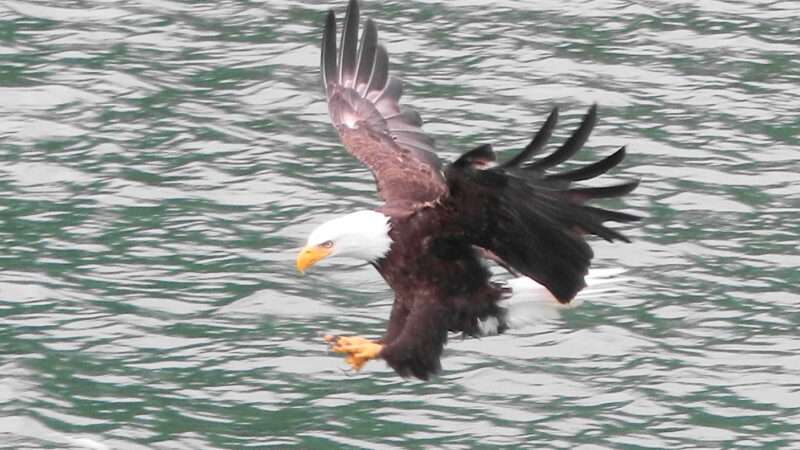
The American bald eagle--our nation's national bird and symbol--is doing well. Populations have been expanding for years, and are now approaching the levels estimated for the founding era.
Many policymakers, pundits and professional environmentalists want to credit the Endangered Species Act for the success of eagle recovery efforts. But try as they might, it is hard to find much evidence that the ESA (as opposed to other conservation laws and recovery efforts) did much good, for reasons I explain in the latest issue of PERC Reports, published by the Property & Environment Research Center in Bozeman, MT.
The biggest factor in the eagle's recovery was almost certainly the banning of DDT for most uses. But this was done prior to the enactment of the ESA, under a different law (any by the EPA, not the FWS). The eagle also received more targeted protection from other laws. The bald eagle was officially removed from the endangered species list in 2007, and since then populations have continued to soar without the ESA's protection.
There's more, but those are reasons to read the article. It concludes:
Americans should be pleased that bald eagle populations continue to expand. The growing number of bald eagles is a conservation success story. But given the act's longstanding and widespread record of failing to promote species recovery, we should be careful before attributing that success to the Endangered Species Act.
[ And, yes, for those curious, I took the picture that accompanies this post.]
The post The American Bald Eagle Is Back - But Don't Credit the Endangered Species Act appeared first on Reason.com.
FIP XML/RSS/RDF Newsfeed Syndication https://freeinternetpress.com/rss.php
© 2026 FreeInternetPress.com
Free Internet Press is licensed under a Creative Commons Attribution 3.0 United States License. You may reuse or distribute original works on this site, with attribution per the above license. Any mirrored or quoted materials may be copyright their respective authors, publications, or outlets, as shown on their publication, indicated by the link in the news story. Such works are used under the fair use doctrine of United States copyright law. Should any materials be found overused or objectionable to the copyright holder, notification should be sent to [email protected], and the work will be removed and replaced with such notification.
Please email [email protected] with any questions.