

My New Dispatch Article on the Legal Case Against Trump's Section 338 Tariffs Targeting Canadian Imports
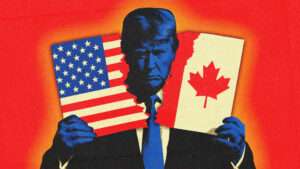
Today, The Dispatch published my new article on the case challenging Trump's Section 338 tariffs against Canada. Here is an excerpt:
Courts have already ruled against two avenues President Donald Trump used to impose his tariff regime. That hasn't stopped his efforts to attempt to deploy obscure or outdated trade law provisions to justify new import levies.
His latest tool is the Smoot-Hawley Tariff Act of 1930, the notorious legislation that gravely exacerbated the Great Depression.
Section 338 of that law is the basis of Trump's massive 50 percent tariffs on a variety of Canadian imports, including motor vehicles, furniture, dairy products, and more. On October 20, Gellert Global Group Corp., a major food importer and producer based in New Jersey, filed the first lawsuit challenging those tariffs before the U.S. Court of International Trade, the federal court with jurisdiction over tariff cases.
Gellert, which imports Canadian cheese subject to the tariffs, is represented by the Liberty Justice Center, a public interest law firm I worked with on the case challenging the massive tariffs Trump imposed under the International Emergency Economic Powers Act (IEEPA). It resulted in the tariffs' invalidation in February by the Supreme Court, which not only ruled that IEEPA doesn't authorize tariffs but also emphasized that tariffs are a congressional power, and that the president does not have the power to "impose tariffs on imports from any country, of any product, at any rate, for any amount of time." The Section 338 tariffs are a similar power grab.
They are illegal for multiple reasons, part of an ongoing effort by this administration to usurp Congress' constitutional authority over tariffs. In addition, they harm the U.S. economy and poison relations with a key ally. Section 338 of the 1930 Tariff Act has never been used by a president to enact tariffs before; Philip Zelikow, a conservative trade policy expert and former Bush administration official, has shown that Section 338 was superseded by legislation enacted in 1962 and 1974.
Even if Section 338 is still operative, Trump's tariffs on Canadian goods violate its requirements. As the complaint explains, the Canadian trade measures cited by Trump as justification for the new tariffs do not discriminate against U.S. goods; Section 338 can only be used against discriminatory policies. Some of the Canadian measures retaliate against previous tariffs imposed by Trump. Most do not actually treat U.S. goods less favorably than imports from many other countries. In addition, the Section 338 tariffs go well beyond "offsetting" Canadian measures, violating another requirement of the law….
The administration's interpretation of Section 338 also runs afoul of the major questions doctrine, which requires Congress to "speak clearly" when authorizing the executive to make decisions of "vast economic and political significance." Under Trump's approach, Section 338 can be used to impose 50 percent tariffs whenever a trading partner imposes any restrictions on U.S. goods, or simply chooses not to buy them. And the resulting tariffs need not be calibrated to those they are supposed to "offset." This is a blank check to impose massive tariffs against almost any imports at any time—exactly the kind of power the Supreme Court, in its ruling on the IEEPA case, determined the executive cannot have…
If Section 338 is still valid and does grant the kind of nearly unlimited authority Trump claims, that would violate the constitutional "nondelegation" doctrine, which restricts delegation of legislative power to the executive…
The Section 338 tariffs are part of an ongoing series of import taxes Trump has instituted in the wake of the IEEPA decision, seeking to again usurp the unlimited tariff authority the Supreme Court denied him. He previously tried to use Section 122 and Section 301 of the Trade Act of 1974 to essentially replicate the IEEPA tariffs. In both cases, he sought to transform a narrowly limited tariff authority into a blank check to impose massive tariffs at will…
In addition to illegally usurping Congress' authority under the Constitution, these tariff actions raise prices for consumers, greatly reduce economic growth, would impose some $700 billion in new taxes on Americans over a 10-year period, and have failed to increase manufacturing employment, despite Trump's claims that they would achieve that goal.
The tariffs against Canada—combined with Trump's repeated threats to make Canada the "51st state"—have also poisoned U.S. relations with a key ally. The percentage of Canadians with a favorable view of the U.S. has fallen from 54 percent in 2024 to only 33 percent this year—a worse rating than even China's authoritarian regime…. Alienating a key ally and trading partner doesn't make America "great again." It makes us weaker, poorer, and more isolated.
The post My New Dispatch Article on the Legal Case Against Trump's Section 338 Tariffs Targeting Canadian Imports appeared first on Reason Magazine.
FIP XML/RSS/RDF Newsfeed Syndication https://freeinternetpress.com/rss.php
© 2026 FreeInternetPress.com
Free Internet Press is licensed under a Creative Commons Attribution 3.0 United States License. You may reuse or distribute original works on this site, with attribution per the above license. Any mirrored or quoted materials may be copyright their respective authors, publications, or outlets, as shown on their publication, indicated by the link in the news story. Such works are used under the fair use doctrine of United States copyright law. Should any materials be found overused or objectionable to the copyright holder, notification should be sent to [email protected], and the work will be removed and replaced with such notification.
Please email [email protected] with any questions.