

If You Get Drunk and Brandish a Fake Gun in a Waymo, Don't Blame the Cameras
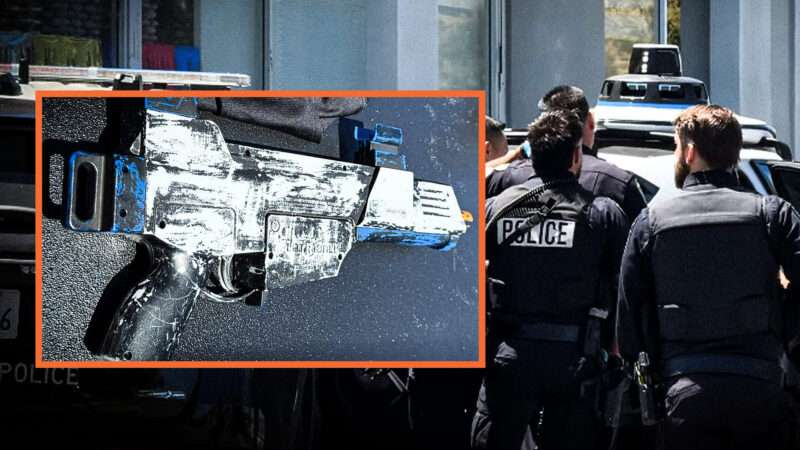
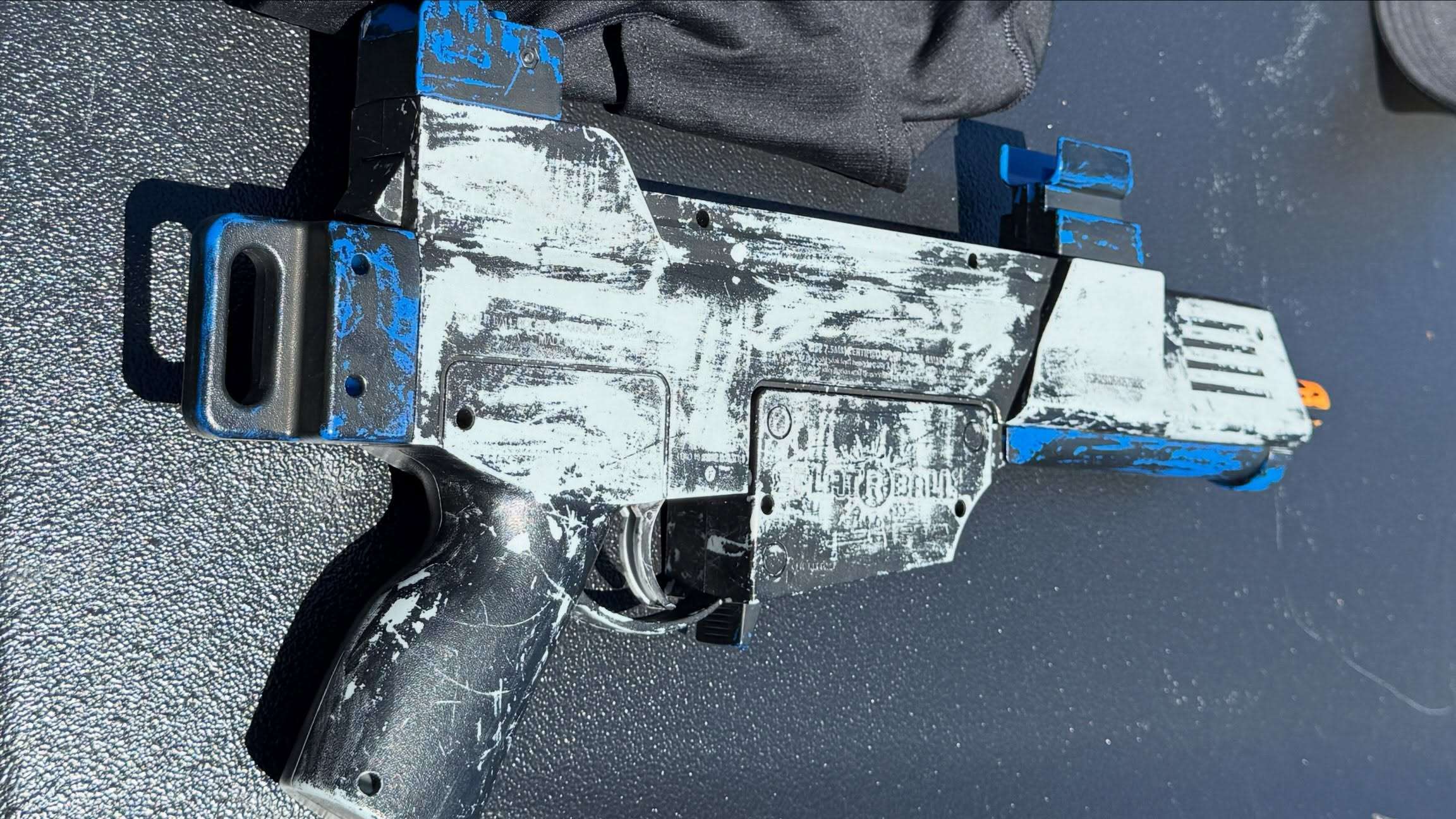
Two teenagers were detained by police in San Mateo, California, earlier this week after a Waymo representative alerted law enforcement that the vehicle's underage occupants were drinking alcohol and shooting what appeared to be a real weapon out of the driverless car.
A Waymo representative, "monitoring the vehicle's live interior camera feeds," called the San Mateo Police Department after seeing the teens fire a toy water-bead blaster that resembled a real gun, according to NBC Bay Area. Waymo shared the car's location with authorities and disabled the vehicle after telling its teen occupants it was "experiencing mechanical trouble," according to the cops.
In an attempt to inject a bit of humor into what could have been a more serious situation, the police department began its recap of the event on Facebook with "Parents, do you know where your teens are? @waymo does!"
While the levity was mostly well-received in the comments, some people used the post to raise questions about privacy in the age of autonomous vehicles. Irina Raicu, director of the Internet Ethics program at Santa Clara University, told NPR the post may "make Waymo passengers wonder what triggers a police intervention." At the same time, Alessandro Acquisti, an information technology professor at the Massachusetts Institute of Technology, told the outlet that Waymo is "most likely" not being entirely truthful to customers about its use of their data.
But framing this case as a privacy issue fuels misunderstanding of Waymo's operations and a company's responsibility to its customers.
You have to be within range of your Waymo to unlock the ride. At 14 and 15 years old, respectively, the two teens would not have been eligible to use Waymo unless they misrepresented their age or the ride was booked for them under a different account.
Both options violate Waymo's terms of service, so the company would have been within its rights to terminate the ride per its policy.
Waymo's rules also prohibit "drug or alcohol use" and "weapons of any kind" in its cars, and remind riders that they cannot "bring weapons into the car." Waymo doesn't hide the fact that its vehicles are plastered with cameras and microphones that "act as the 'eyes and ears'" of its driver. Its data policy warns that the company may use cameras to "check that in-car rules are being followed," or "review video under certain circumstances," including "live video during a trip."
It's a question of choice. By choosing Waymo as their ride-share service, the two teens agreed to abide by its policies.
It's reasonable to push back on the company for lying to the teens about the vehicle's condition to hold them for the cops. But as Jeanine Luna, a spokesperson for the police department, told the Associated Press, the teens were "not locked in" and able to "exit the vehicle" at any time. With every opportunity to leave, the pair was likely waiting for Waymo to fix the issue before continuing their joyride.
The encounter could have been very different had the pair been driving themselves. Instead, Waymo's technology effectively de-escalated the situation. Without autonomous driving—which has a stellar safety record—the story of two drunk teens driving and shooting out of a car window likely ends tragically.
Police eventually released the teens to their parents' care without filing charges, though NBC reports the cops are still reviewing whether "additional charges are appropriate."
One can hardly fault Waymo for drawing a line at a customer's willful disregard for its policies and common sense when they choose to play out a Grand Theft Auto–like fantasy in one of its cars.
The post If You Get Drunk and Brandish a Fake Gun in a Waymo, Don't Blame the Cameras appeared first on Reason.com.
FIP XML/RSS/RDF Newsfeed Syndication https://freeinternetpress.com/rss.php
© 2026 FreeInternetPress.com
Free Internet Press is licensed under a Creative Commons Attribution 3.0 United States License. You may reuse or distribute original works on this site, with attribution per the above license. Any mirrored or quoted materials may be copyright their respective authors, publications, or outlets, as shown on their publication, indicated by the link in the news story. Such works are used under the fair use doctrine of United States copyright law. Should any materials be found overused or objectionable to the copyright holder, notification should be sent to [email protected], and the work will be removed and replaced with such notification.
Please email [email protected] with any questions.