

How Do You Define 'Ceasefire'?
Iran said Lebanon had to be included if anyone wanted any hope of a U.S.-Iran ceasefire, so Israel and Lebanon agreed to a ceasefire. But Hezbollah—which acts independently of the Lebanese government and is not entwined with it the way Hamas is with the governance of Palestine—did not agree to it, and fired on Israel. So Israel retaliated, and now we're right back where we started.
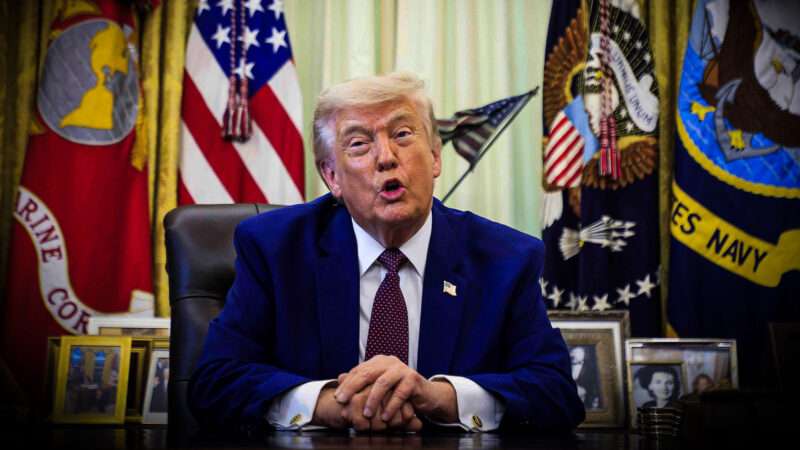
So President Donald Trump's comments yesterday weren't wrong, exactly:
Reporter: How do you define ceasefire?
Trump: In that part of the world, ceasefire is when you're shooting in a more moderate manner pic.twitter.com/wXdr2EraDC
— Open Source Intel (@Osint613) June 3, 2026
In fact, one could make the case he's rather prescient.
"URGENT WARNING TO RESIDENTS OF SOUTH LEBANON!" posted Avichay Adraee, an Israeli military spokesman, on social media. "The fighting in southern Lebanon continues as the Israel Defense Forces continue to target Hezbollah facilities and infrastructure located in your villages and nearby. The Israel Defense Forces do not intend to harm you. To ensure your safety, refrain from heading south of the Zahrani River until further notice!"
All of this raises the question of why it was valuable for Israel and Lebanon to agree to a ceasefire when Hezbollah is the relevant entity. The ceasefire agreement calls for the creation of "pilot zones" where the Lebanese military would "take exclusive control" over "nonstate actors" (meaning Hezbollah). The question is how enforceable that really is.
Meanwhile, Trump said yesterday that the war in Iran was "not a big thing" for the U.S.
"We have the highest stock market in history with a military conflict going on, or a war—some people call it war, some people call it a military—it's not a big thing for us," said the president. "We have a great military. It's not a big thing for us."
What Trump says publicly, and what he actually cares about pursuing, are frequently different (like all presidents). He still seems oriented toward hammering out a ceasefire with Iran, but sticking points—like removing enriched uranium from Iran's territory, so that its nuclear program further stalls—remain.
Furthermore, the war in Iran does in fact appear to be a big thing for one important contingent: the U.S. House of Representatives. Yesterday, they voted to have the president withdraw the U.S. military from conflict with Iran or gain congressional approval to continue, with four Republicans defecting from their own party to vote with Democrats. Now, the war powers resolution goes to the Senate, though it's not totally clear how Trump will play this if it passes there. He's repeatedly cast doubt on the constitutionality of the War Powers Act, but simultaneously does seem interested in winding down the conflict in Iran. It's possible he gets belligerent, or it's possible he uses congressional pressure as an excuse to do a thing he already wanted to do: pursue a ceasefire.
Scenes from New York: The Knicks won! This is now a Knicks-in-six zone. (I think four might be tough for them to swing.)
THE NBA FINALS PARTY ON 7TH AVENUE HAS OFFICIALLY STARTED.
Knicks fans are taking over the streets after a Game 1 win in the Finals. pic.twitter.com/uhcI5bi98X
— ESPN New York (@ESPNNewYork) June 4, 2026

QUICK HITS
- "An insidious bullying tactic is creeping into school cafeterias across the country: Kids are snapping and sharing photos of other students eating lunch," reports The Wall Street Journal. "The shaming tends to fall into two categories: the ugly mouthful and the lonely eater."
- A lesson in unintended consequences, H-1B visa edition: "For almost a decade, South Asians have been the driving force behind [Dallas'] building boom, one of the biggest in the US during the pandemic. They once accounted for 70% of sales at Schneider's Tradition Homes," reports Bloomberg. "But in the past year they've dropped below 30%, leaving his family-owned company with a backlog of 125 luxury properties to sell.…Indian buyers are disappearing from the market as federal and state governments tighten H-1B restrictions and many of the tech companies that employed the new arrivals fire workers in favor of artificial intelligence. Prices in the Collin County suburbs north of Dallas in February dropped almost 9% from a year earlier, compared with a decline of 4% in the metro area as a whole, according to data from brokerage Redfin."
- One, uh, corrective strategy in our Bowling Alone era. Some relevant background, if you want to go deep down the rabbit hole. (I dearly hope my priest isn't reading this newsletter!)
everyone's like "you can't give advice about meeting someone, you just got lucky met your husband at an orgy. that's just totally random and not something anyone else can do!"
you guys. i literally put on a sexy outfit and went to a party centered around one of my interests,…
— Romy (@Romy_Holland) June 2, 2026
The post How Do You Define 'Ceasefire'? appeared first on Reason.com.
FIP XML/RSS/RDF Newsfeed Syndication https://freeinternetpress.com/rss.php
© 2026 FreeInternetPress.com
Free Internet Press is licensed under a Creative Commons Attribution 3.0 United States License. You may reuse or distribute original works on this site, with attribution per the above license. Any mirrored or quoted materials may be copyright their respective authors, publications, or outlets, as shown on their publication, indicated by the link in the news story. Such works are used under the fair use doctrine of United States copyright law. Should any materials be found overused or objectionable to the copyright holder, notification should be sent to [email protected], and the work will be removed and replaced with such notification.
Please email [email protected] with any questions.