

Hate Speech at a High School
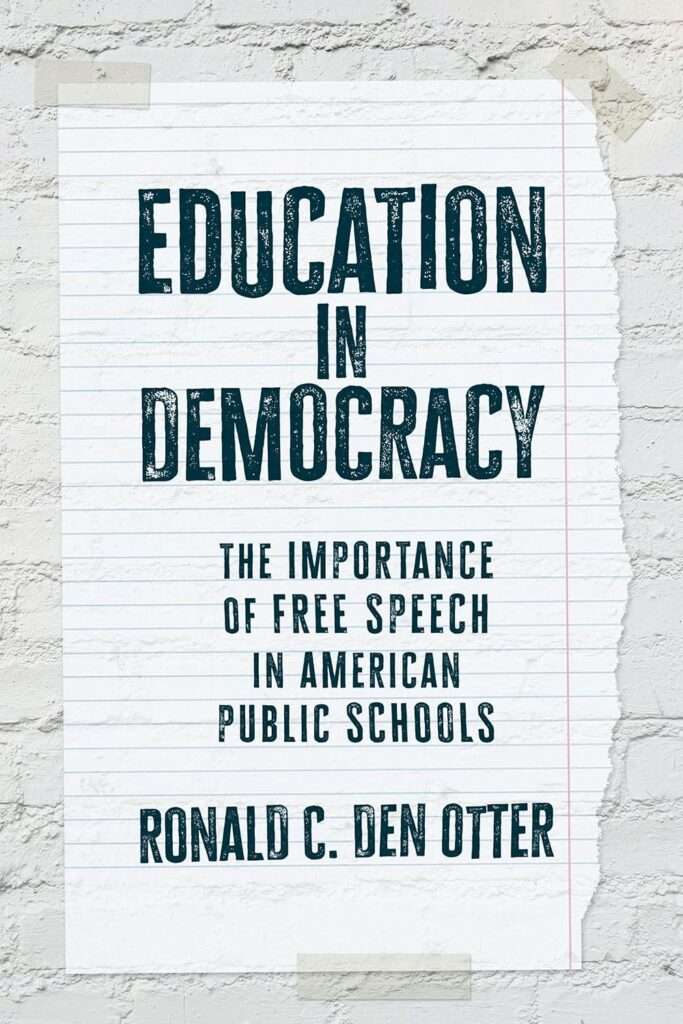
In my last post on the VC, I would like to say a bit about so-called "hate speech" (which I address in the last chapter of my book, arguing that it should be constitutionally protected in public schools). I say "so-called," because it might be better to drop the term "hate speech" insofar as it implies an extreme aversion to a particular group. However, in this post, I will use the term for convenience.
No single legal definition of hate speech exists. The term is notoriously difficult to define with sufficient precision. As a result, those who support anti-hate speech codes on college campuses, for example, must say more about what to do about invariable vagueness and overbreadth problems than they usually do. That hate speech is constitutionally protected in the U.S. has not stopped university administrators to try to make it much harder for students to express certain ideas with impunity.
I doubt that any anti-hate speech code at a public school could be formulated and applied in a way that would not ban or chill speech that ought to be constitutionally protected. Such codes would be ripe for overreach and misapplication, apart from allowing viewpoint discrimination. It is important to understand that even if a particular word—like a racial slur—has little, if any free speech value most of the time, the fundamental problem is that if the government can ban that word, then it also has the authority to ban other words, regardless of the context and the intent of the speaker or writer.
In the late 1980s and 1990s, lower courts struck down a variety of speech codes on college campuses. In R.A.V. v. City of St. Paul, writing for the majority, Justice Antonin Scalia invalidated a Minneapolis anti-hate speech ordinance on the ground that it was underinclusive. For him, the law in question invited government to engage in viewpoint discrimination inasmuch as people could be prosecuted for expressing racist views but not for expressing racially egalitarian views or homophobic views.
In Scalia's view, government must remain neutral towards all viewpoints, even racist ones, so that the "fight" is fair. No viewpoint is better or worse than another from the standpoint of the First Amendment, and it is up to the public to decide which ideas they will embrace and reject. There is no way to regulate hate speech without also censoring ideas. Doctrinally, that fact presents an enormous problem for those who want to alter the constitutional state quo by creating a new category of unprotected speech. It is not evident how to balance the importance of free speech against the importance of protecting victims of hate speech from some sort of harm. Reasonable people disagree about how harmful it is likely to be, which is situational and can vary from person to person, and what can or should be done about it.
Progressives should not be so eager to embrace bans on hate speech when their own chickens could come home to roost. Recently, some European countries have curbed pro-Palestinian protests designed to raise awareness about the violence in Gaza. This response is problematic for a few reasons, including the importance of the expression of the viewpoint that the Israeli conduct is unjust (regardless of whether this proposition is true) so that the public can decide for itself which side, if any, to take.
This generation of college students is more inclined to suppress speech that offends minorities, makes them feel uncomfortable, or undermines their equality. This inclination comes from the right place but the implementation of such a speech code would have a high cost: trying to protect vulnerable students from hurtful ideas, school officials would be able to engage in viewpoint discrimination and punish students who express their sincere beliefs, which of course, may be wrong.
Additionally, censorship may reduce the likelihood that uncomfortable conversations will take place that will enlighten white students who may be racially illiterate. A number of years ago, I was taken aback when I realized how many of my students, who had grown up in this county, did not know why people burn crosses. When a white student wears blackface to school as part of a Halloween costume, school officials and teachers have an opportunity to educate students about the historical meaning of minstrel shows and its present-day implications. Understandable anger or outrage should not replace the need to explain why such a costume is problematic; it is not as if all or even many junior high and high school students (or adults for that matter) know why that is so. At minimum, all students must become used to encountering unwelcome ideas, even the worst ones.
Few people will want to talk about race openly and honestly if what they say could be considered racist speech under an amorphous anti-hate speech code. A few years ago, at the Georgetown Law Center, Professor Ilya Shapiro was investigated (and eventually cleared after several months before he resigned), for making an offensive comment on Twitter about then-U.S. Supreme Court nominee Ketanji Brown-Jackson and her being a "lesser black woman." Regardless of whether Shapiro was right or whether he phrased his comment well, he meant that President Joseph Biden should not have promised to put a black woman on the Court during his presidential campaign in 2020. Apparently in Shapiro's mind, Biden should have picked from a much wider pool of qualified applicants. Surely at law schools and elsewhere, there is a public discussion worth having about the meaning of merit, the judicial selection process, its political dimensions, and the lack of sex and racial diversity on the federal bench. This incident also illustrates why the threat of punishment is the wrong approach in dealing with speech that is offensive or racist. Frequently, people – students included – do not choose their words carefully when they speak extemporaneously, use social media, or blurt out something in the heat of the moment. Any sensible theory of free speech must take people as they are --error-prone, emotional, uninformed, insensitive, and thoughtless-- and not how we wish them to be.
As Matthew Kramer observes in Freedom of Expression as Self-Restraint, anti-hate speech laws are "designed to control people's thoughts." Although that may be an overstatement, Kramer is right that if we are genuinely committed to respect for the autonomy of each student, then they will make racist remarks and use racial epithets, unfortunately. They will also make mistakes that they may regret. That is the price of letting them come to her their conclusions for better or for worse. A speech code on campus is a blunt instrument. Alternative remedies must be considered before the state engages in censorship. Other non-censorious countermeasures could be equally or more effective (and much more respectful of student autonomy).
One of the most difficult challenges is to figure out exactly what to do about such speech, especially when laws proscribing it will not make it disappear, may be hard to enforce, and may have unintended consequences. It is not evident that the hate speech problem in the United States, because such speech is constitutionally protected, is worse than that of European countries in which such speech is prohibited (although that result may be due to under-enforcement). In terms of reducing hate speech, a ban on it on a high school campus may help to mitigate it, and racial and ethnic minority students may be less likely to directly experience it, but it will not disappear. At most, students who use such language are more likely to be more careful about who may overhear them or with whom they share their real beliefs.
There may be more tactful ways of expressing racist sentiments but doing so in a more "civil" manner is not necessarily much of an improvement. Doctrinally, people are allowed to express pernicious stereotypes and make outrageous claims; it is not the role of government to censor them. Alternatively, "good" speech can counteract "bad" speech, with good or bad often being in the eye of the beholder.
Students may want to engage in such speech yet do not do so for fear of being suspended or expelled. We should not necessarily want a racist student punished for what they say or write; we should want them refuted. The expression of racist ideas can have some educational value, then, when educators can turn an incident into a teachable moment. So, yes, to answer one VC reader's query in the comments section, a student should be able to use the "n" word without the possibility of being disciplined. But that is not to say that they should use the word. To have a legal or constitutional right to do this or that does not entail that it is fine to exercise such a right whenever they happen to want to do so. It is to say that it is their choice and that others are free to respond with their own counter speech.
The post Hate Speech at a High School appeared first on Reason.com.
FIP XML/RSS/RDF Newsfeed Syndication https://freeinternetpress.com/rss.php
© 2026 FreeInternetPress.com
Free Internet Press is licensed under a Creative Commons Attribution 3.0 United States License. You may reuse or distribute original works on this site, with attribution per the above license. Any mirrored or quoted materials may be copyright their respective authors, publications, or outlets, as shown on their publication, indicated by the link in the news story. Such works are used under the fair use doctrine of United States copyright law. Should any materials be found overused or objectionable to the copyright holder, notification should be sent to [email protected], and the work will be removed and replaced with such notification.
Please email [email protected] with any questions.