

Breaking Down the Emotional Ending of Four Hands, Two Sonatas
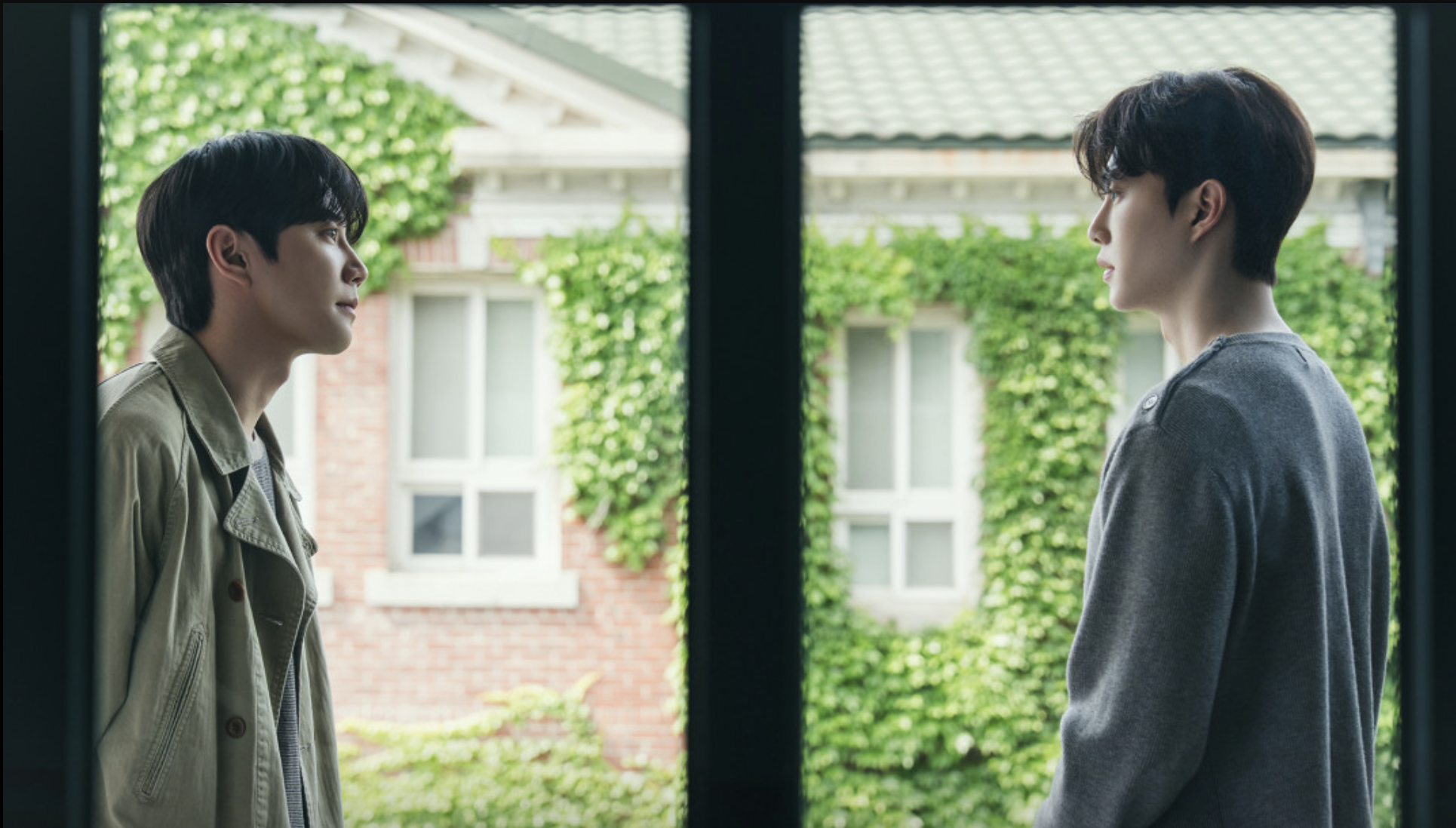
When Four Hands, Two Sonatas launched in late August, the Korean drama presented as a traditional coming-of-age melodrama about two, piano-obsessed teens at a hyper-competitive arts high school. In his first role following his military service, Song Kang (Sweet Home) stars as Kang Pi-o, the perfectionist grandson of a renowned maestro whose mother pushes him to be the very best. And in his last role filmed before he enlisted, Lee Jun-young (When Life Gives You Tangerines) plays Choi Jeong-yo, a scholarship student and musical prodigy who worries more about keeping his alcoholic stepdad safe from loan sharks than finishing first in prestigious contests. When the two are paired together to play “four hands,” or a piano duet on the same instrument, their different backgrounds and priorities put them at odds. However, their love for music wins out, and the two develop a life-changing friendship.
As the 12-episode series progresses, and the story jumps nine years into Pi-o and Jeong-yo’s adulthood, Four Hands, Two Sonatas morphs from a coming-of-age story into a psychological thriller in which trauma, misunderstandings, and obsession combine to place the future of these talented musicians in question. Through it all, Pi-o and Jeong-yo’s intense, often tender relationship serves as a throughline, bringing many viewers to question if the Netflix series qualifies as a boys’ love (aka BL) drama. Let’s discuss how Four Hands, Two Sonatas’ ending answers some of these questions.
Who ordered Jeong-yo’s abduction?
The first chapter of Four Hands, Two Sonatas’ story comes to a head in the Czech Republic, where teenaged Pi-o and Jeong-yo are among a handful of teenage musicians from around the world who are competing in the Prague Harmonie International Competition. After years of cruel dismissal from his grandfather, Kang Seung-woon (Jung Jin-young), and relentless pressure from his mother, Kang Ji-hye (Yoon Se-ah), Pi-o doubts his talent. He has decided that if he does not win this competition, he will quit piano forever. He begs Jeong-yo to compete because he wants to prove, once and for all, that he can beat his best friend. Jeong-yo, who wants Pi-o to be happy, agrees to enter the competition.
Meanwhile, Ji-hye does not think that her son can beat Jeong-yo. Not only does Jeong-yo have an emotional connection to his music performance that Pi-o struggles to find himself, but Pi-o has injured his pinky in the leadup to the final performance, thanks to his obsessive practicing. Faced with the possibility of her son giving up piano forever, Ji-hye decides to hire two men to abduct Jeong-yo, ensuring that he cannot compete in the final performance. However, the abduction goes wrong, and Jeong-yo is shot in his attempt to escape. Not only does he not show up for the final performance, but he disappears completely and is presumed dead. Pi-o wins the competition, but is devastated at the disappearance of his friend.
The nine-year time jump
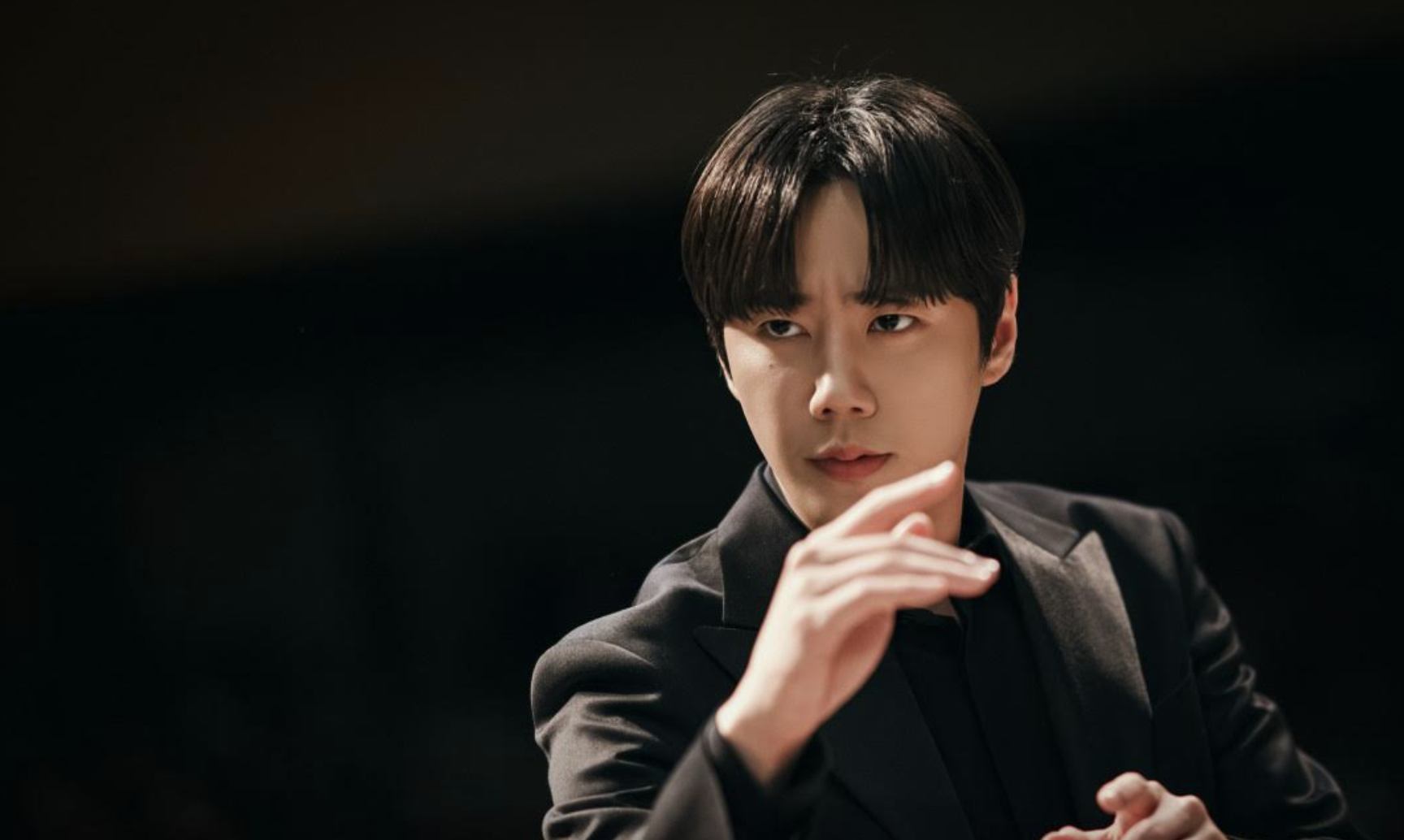
Nine years later, Pi-o is an internationally renowned solo pianist, having used his victory at the Prague Harmonie International Competition to launch a career. But he has never been able to move on from the disappearance of his friend. He has hired a private investigator to continue searching for Jeong-yo and spends his free time following up on leads. Eventually, he has a meeting with one of the men who abducted Jeong-yo. The man claims Jeong-yo is dead, but he won’t give Pi-o any additional information unless he pays him $1.3 million. Pi-o goes to get the money, but the man is killed by a fellow gang member before he can tell Pi-o the whole story.
Pi-o grieves the death of his friend, unable to get out of bed for days. He stops making music and decides to spend time in Europe. While attending a conducting competition in Brno on a whim, he sees Jeong-yo on stage. He is alive, going by the name Luca Domenico. However, when Pi-o approaches Jeong-yo, the man claims to not know him, revealing that he has amnesia and cannot remember anything prior to an accident nine years earlier.
Jeong-yo’s skills as a musician make international waves. He is recognized as the teen prodigy who went missing a decade prior, and his return as an up-and-coming conductor is heralded. Hankook Symphony Orchestra, which is run by Pi-o’s grandfather, invites Jeong-yo to be a guest conductor.
Jeong-yo’s quest for revenge
At first, Jeong-yo’s return to Seoul and Pi-o's life goes relatively well. Jeong-yo, who can no longer play the piano due to nerve damage from when he was shot, wants to work with Pi-o. He brings his friend on as a soloist for his debut with the orchestra, and the performance is a success. Then, he asks Pi-o to be the soloist for the debut of his first original work, a concerto titled “Nemesis.” Pi-o recognizes it as a piece of music, originally titled “Nocturne,” Jeong-yo first started working on as a teenager. This calls into question Jeong-yo’s claims that he has amnesia.
Meanwhile, Pi-o discovers through his private investigator that his mother was the one behind Jeong-yo’s abduction. He desperately wants to confess to his friend. However, Ji-hye says she would rather die than confess, threatening to kill herself if Pi-o tells anyone. Pi-o is forced to keep his mother’s secret, and agrees to be the soloist in Jeong-yo’s debut of “Nemesis.” During the preparation process, Jeong-yo becomes increasingly cruel and emotionally abusive toward Pi-o.
When Pi-o confronts Jeong-yo about lying about his amnesia, Jeong-yo comes clean. He makes it clear to Pi-o that he has returned to get revenge. He believes Pi-o was the one who arranged his abduction, and blames him for his inability to play the piano. Pi-o, who feels immense guilt about what happened to Jeong-yo and wants to protect his mother, goes along with the lie that he was the one responsible for Jeong-yo’s life-changing injuries.
In the following weeks, Pi-o barely fights back as Jeong-yo pushes him to practice “Nemesis” past the point of mental and physical exhaustion. During a pre-performance recording of the piece, Jeong-yo forces dozens of takes and eventually canceling the recording, claiming that it is Pi-o’s limitations as a pianist that have caused the delay. Pi-o, who signed a terrible contract at Jeong-yo’s urging, is forced to pay the penalties for the delayed recording. Jeong-yo drops him from the “Nemesis” performance, and Pi-o’s agency plans to cancel his contract.
The “Nemesis” performance
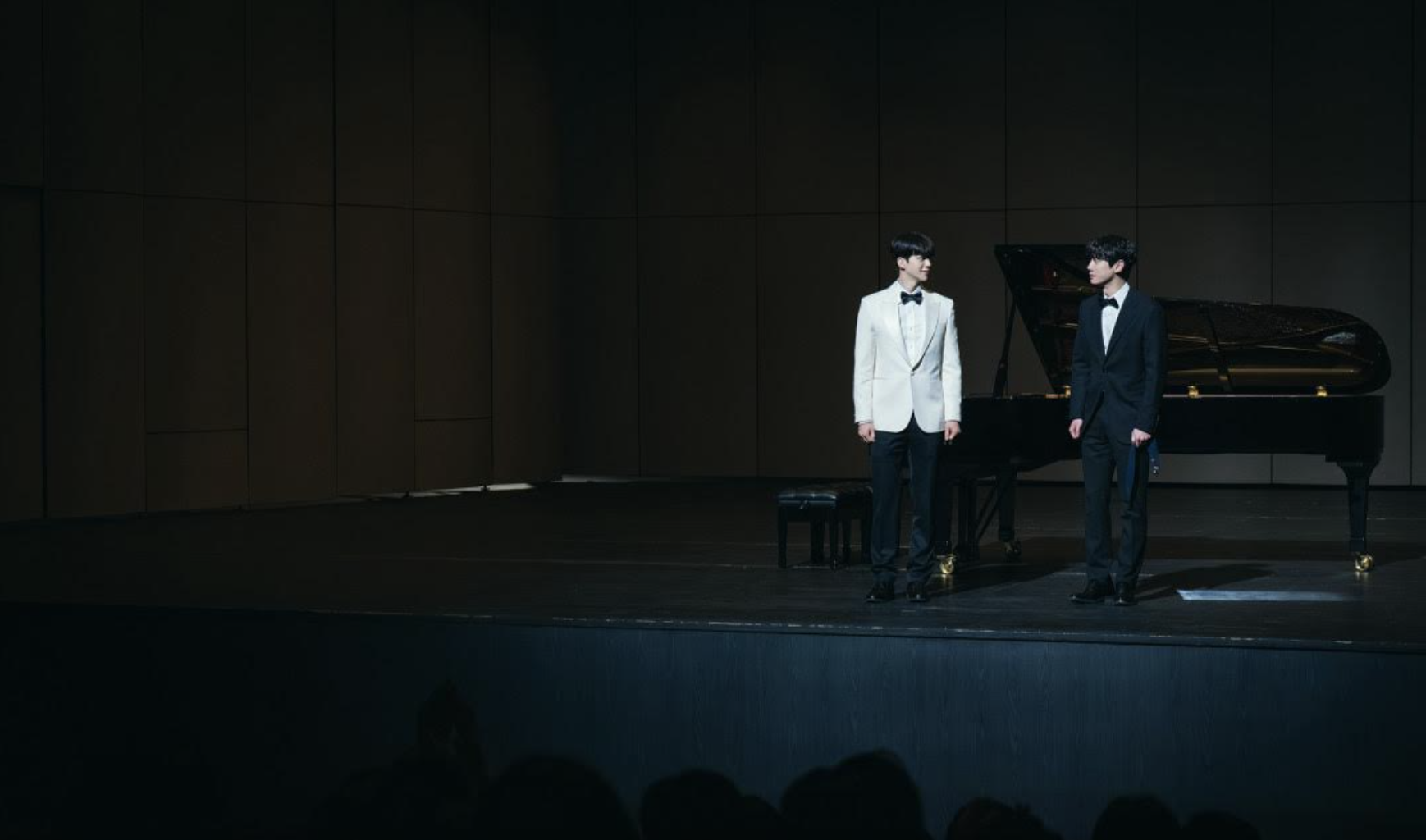
The traumatized Jeong-yo finds neither peace nor triumph in revenge. He still cares about Pi-o, and he cares about “Nemesis.” The concerto, from its beginnings as “Nocturne” to its current incarnation, was inspired by his relationship with Pi-o, and no one else can do it justice. Pi-o, who still feels responsible for Jeong-yo’s suffering, wants to do the solo. The music, and his feelings for Jeong-yo, have allowed him to unlock a new, more emotionally connected level of his performance. He convinces Jeong-yo to let him do the piece by playing it once again for his friend-turned-nemesis. The performance is a resounding success, and Jeong-yo tells Pi-o: “The piece was meant entirely for you.”
Rather than revel in the success, Pi-o chooses the moment to make a public confession. To the gathered audience, he claims that he was the one responsible for Jeong-yo’s abduction years prior. The police arrest him for the crime. Jeong-yo, who is confused by the many emotions he feels for Pi-o, is furious that the man’s judgement and punishment has been taken out of his control. For Pi-o, this is the only way he can protect both his mother and Jeong-yo.
Ji-hye’s punishment
Ji-hye is devastated at the arrest of her son, and furiously tries to confess to the crime herself. Initially, neither the police nor Jeong-yo believe her. Her confessions look like maternal desperation rather than the truth. However, when Pi-o’s private investigator gives Jeong-yo a recording of their conversation with one of Jeong-yo’s abductors, the truth wins out. On the audio recording, Jeong-yo hears how desperate Pi-o was to find him, and how devastated he was at the news of his death. He realizes that he has been punishing Pi-o for a crime that he did not commit.
Ji-hye is sent to jail for her crime, and is therefore unable to be with her father when he dies from a heart condition shortly after. Seung-woon requests Pi-o and Jeong-yo visit his hospital bedside. He apologizes to both of them for the pain he caused. It was his stubborn disapproval of Pi-o that led Ji-hye to take such drastic actions. Seung-woon had never forgiven Ji-hye for ruining her chances at becoming a professional ballerina by getting pregnant with Pi-o. Seung-woon, who loved music above all else, wants to listen to Pi-o’s performance of “Moonlight Sonata” as he dies. Pi-o plays the recording for him, finally winning his grandfather’s approval.
A final, four hands performance
Pi-o once told Jeong-yo that he was only happy when he was playing music, so when Jeong-yo learns that Pi-o has sold his piano and intends never to play again, he decides he will not let that stand. He buys Jeong-yo’s piano and brings it to the musical instrument market where Jeong-yo learned to play as a boy. He tells Pi-o that he has regained control of his hand and can play again. The two play four hands together again, and are happy. Later that night, by the Han River, Pi-o asks Jeong-yo to make music with him; it’s all he’s ever really wanted to do. Jeong-yo gently refuses.
The next day, Jeong-yo disappears from Seoul. He has resigned from the Hankook Symphony Orchestra and left Pi-o a note. In it, he tells his Pi-o that he has been “his light and hope,” and that, even when he was seeking revenge, he dreamt about them playing duets together. Jeong-yo says he has left to use his music to comfort others.
Pi-o grieves the loss of his friend again, but uses Jeong-yo’s stated mission to drive his own choices. Rather than performing the most technically complex compositions on a classical music stage, he starts performing simpler songs in small, rural towns and in hospitals; he hopes his surprise pop-up concerts bring comfort to those who hear his music.
Does Four Hands, Two Sonatas have a happy ending?
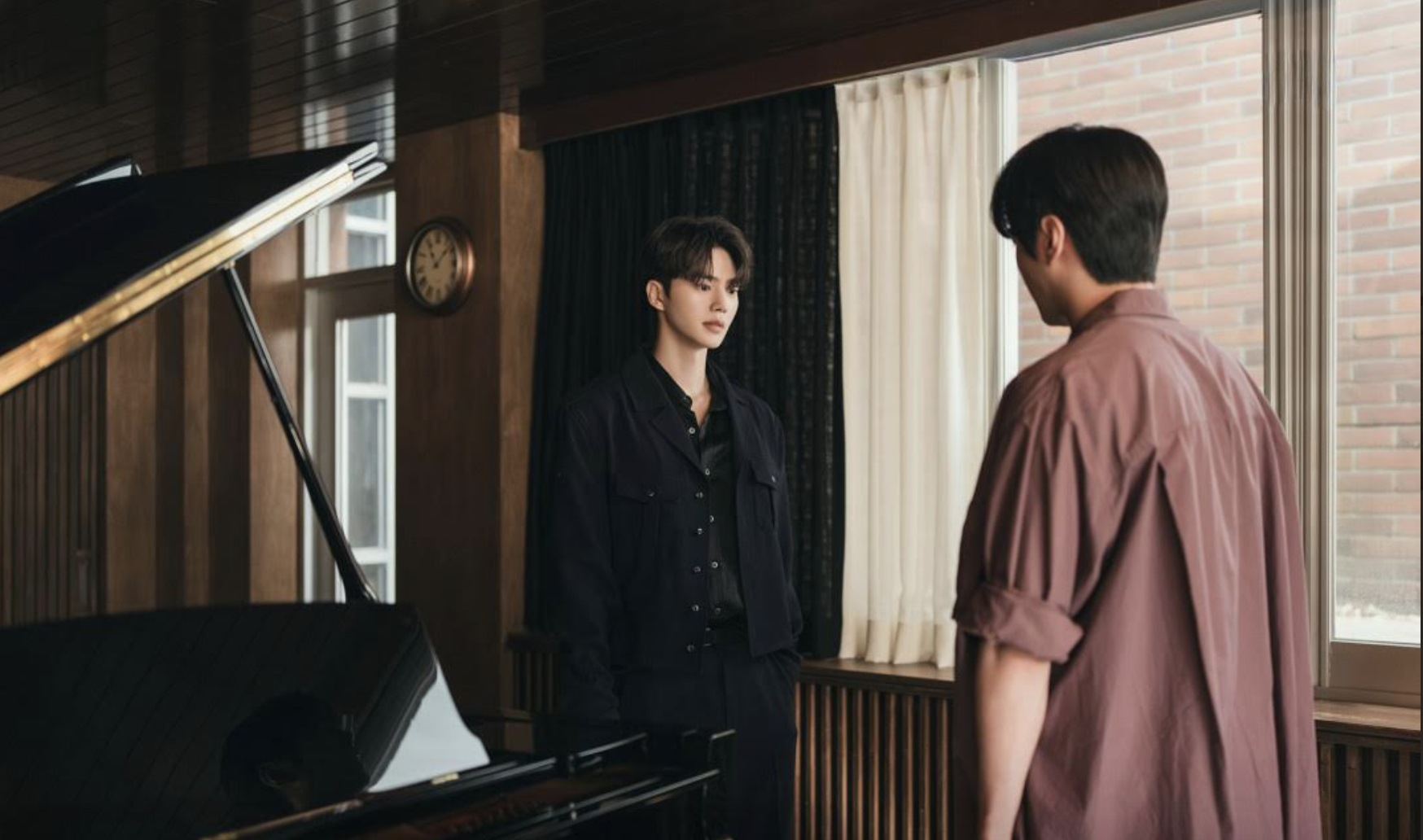
Yes, against all odds, Four Hands, Two Sonatas has a happy ending—though it is not without its complexities. Three years pass before Pi-o and Jeong-yo see one another again. One day, after Pi-o performs at a hospital, a doctor approaches him to ask how Jeong-yo is doing. The doctor informs Pi-o that he had given Jeong-yo a shot three years prior that temporarily granted him use of his injured hand but at the risk of losing all function forever. Pi-o realizes that Jeong-yo lied to him when he told him that he could play again. Jeong-yo wanted to absolve Pi-o of his misplaced guilt, so he tricked his friend into thinking he could play again. His subsequent disappearance preserved the lie.
For the first time in three years, Pi-o posts a video recording of his performance. Though the video does not show his face, he knows Jeong-yo will recognize his interpretation of “Nemesis.” The viral beacon works. Pi-o receives an unsigned postcard from the Czech Republic offering some friendly critiques. Pi-o immediately packs his bags, and finds the church on the front of the postcard. Jeong-yo is conducting a choir of children inside of the church. He is wearing a religious robe, and has seemingly been dedicating his time to atonement rather than glory or revenge. When Jeong-yo turns around to see Pi-o, the two lock eyes and smile at one another. Four Hands, Two Sonatas ends with Jeong-yo and Pi-o together again, seemingly free of the pressures and misunderstandings that plagued them for so long.
The story’s happy ending comes more than just in the form of a resolution of Jeong-yo and Pi-o’s relationship. The drama also makes a determination about the function of art in our society as something beyond the technical. In the age of AI, Four Hands, Two Sonatas argues that art can and should be made by flawed humans, and that the measure of a musical performance is not determined by how technically perfect it was but also in how it made both the performer and the audience feel.
Is Four Hands, Two Sonatas a BL drama?
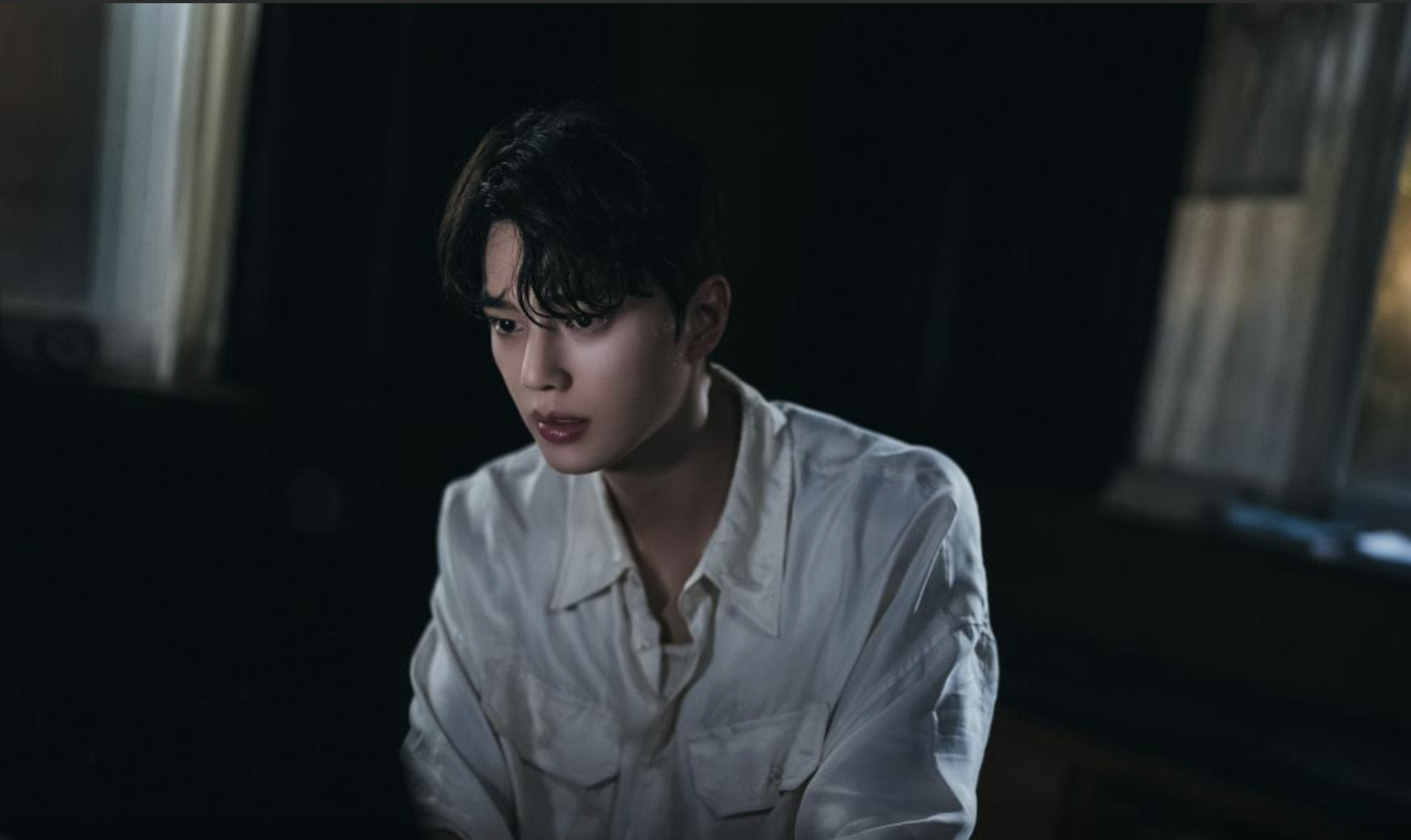
As soon as the trailer for Four Hands, Two Sonatas dropped, viewers began wondering if the K-drama might be a queer romance. The initial assumption was that it was not. Though South Korea has begun to produce BL dramas, including 2020’s Where Your Eyes Linger and 2022’s Semantic Error, these series are not mainstream. Four Hands, Two Sonatas is a primetime drama broadcast on tvN, one of Korea’s mainstream pay TV networks, with some of its most high-profile TV actors. In a country where the law does not recognize same-sex marriage nor protect against discrimination based on sexual orientation, there has yet to be a mainstream queer romance. When Love in the Big City, a slice-of-life drama centering a gay protagonist was released in 2024, it was met with homophobic outcries from anti-LGBTQ groups within Korea, accusing the drama of "glorifying and promoting homosexuality.”
However, BL fans who dismissed the possibility of a queer love story may want to give Four Hands, Two Sonatas a chance. Though the drama never explicitly represents Pi-o and Jeong-yo’s relationship as romantic, it also never explicitly undermines the possibility, as is often the case with dramas featuring an intense emotional connection between two men. Pi-o does not end up with longtime friend and occasional girlfriend Jae-in (Jang Gyu-ri). Jae-in is open about her romantic feelings for Pi-o throughout the series, and the two begin to date only when Pi-o believes that Jeong-yo is dead. Pi-o’s feeling for Jae-in are treated as real—he cries when he breaks up with her during Jeong-yo’s period of emotional torture—but he always chooses Jeong-yo as his companion whenever he is an option, including in the finale.
The exact nature of the relationship between the two men is left open for interpretation, and has been publicly commented on by some involved in the production. When asked about the BL interpretation by Korean outlet Star News, Jang said: “When I first read the script, I knew that Jeong-yo and Pi-o were deeply intertwined through music. The work belongs to the viewers, so I respect everything.” Director Park Hyeon-seok’s statements on the subject were similarly open. "It is an immeasurable happiness and a source of gratitude for the entire production team that viewers enjoy the drama from their own diverse perspectives," Park told Korean media. "I am simply grateful that they fill the gaps between the writer's text and the visualized scenes with rich interpretations."
Speaking about his intentions for the script, writer Shin Yi-won said the story began with the question “What if Mozart and Salieri were best friends?” though he also drew inspiration for Pi-o and Jeong-yo from the toxic love between Heathcliff and Catherine in Wuthering Heights. Court composer Antonio Salieri and musical prodigy Wolfgang Amadeus Mozart were contemporaries in 18th century Europe, and their professional rivalry has sometimes been framed as a love-hate relationship in modern media retellings of their lives, including in Peter Shaffer’s 1979 play Amadeus and its 1984 film adaptation. "I am a case of someone who attended an arts high school filled with geniuses, consumed by an inferiority complex while thinking of myself as Salieri,” Shin said. “However, a professor in college told me, 'Art is not done with mere petty talent. To move people with true art, pour your entire life into it.'” Whatever else Four Hands, Two Sonatas may be, the series is deeply devoted to imparting this artistic message.
FIP XML/RSS/RDF Newsfeed Syndication https://freeinternetpress.com/rss.php
© 2026 FreeInternetPress.com
Free Internet Press is licensed under a Creative Commons Attribution 3.0 United States License. You may reuse or distribute original works on this site, with attribution per the above license. Any mirrored or quoted materials may be copyright their respective authors, publications, or outlets, as shown on their publication, indicated by the link in the news story. Such works are used under the fair use doctrine of United States copyright law. Should any materials be found overused or objectionable to the copyright holder, notification should be sent to [email protected], and the work will be removed and replaced with such notification.
Please email [email protected] with any questions.