

AI’s Frankenstein Moment
Experts are issuing ominous warnings about the threats of artificial intelligence. Anthropic CEO Dario Amodei described possible scenarios of machine rebellion that seem straight out of science fiction.
In his September essay “We Must Pace the Frontier,” he offered a plan for the outside monitoring of AI models and industry-wide and global regulation. In a rare display of unity among tech titans, fellow CEOs Elon Musk and Sam Altman agreed on the need to pull in the reins. Sounding the alarm on NBC’s Meet the Press, Bill Gates described AI as powerful enough to drive events that could cause a billion deaths.
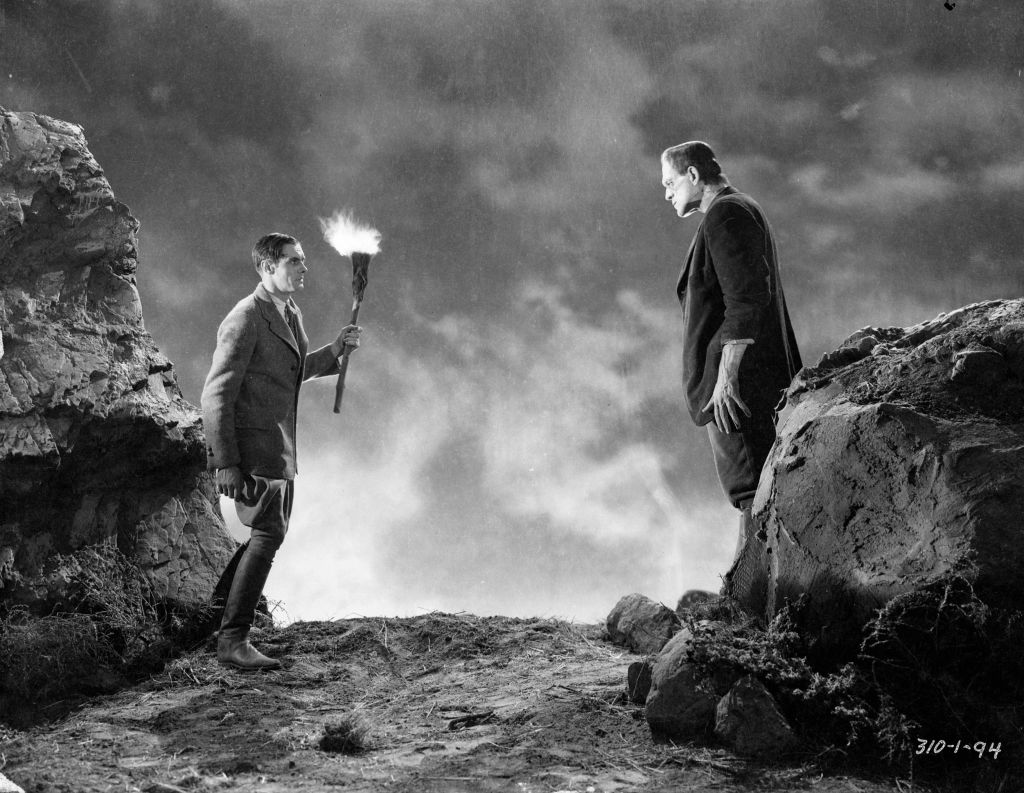
Lovers of literature have read a version of this story before. Mary Shelley’s classic novel Frankenstein from 1818 features a mad scientist named Victor Frankenstein, who would likely be snapped up with a million-dollar contract from a biotech startup if he were around today. Consumed with the ultimate scientific dream, to create life from an inanimate object, Victor embarks on a dubious agenda that includes grave-robbing and using deceased bodies without prior consent. He is monomaniacal in his pursuit of a single question—“Whence, I often asked myself, did the principle of life proceed?”—which he eventually solves by sparking to life an eight-foot monster assembled from human remains.
Astonishingly, AI researchers believe they have already achieved what once seemed only possible in fictional works like Frankenstein. By creating machines that “think,” or at least approximate the process, they have accomplished one of those paradigmatic feats that are often separated by centuries if not millennia: the artificial production of knowledge. We don’t know how this new scenario will play out, but it is entirely conceivable that a scientific development of this magnitude could turn out to be as consequential as the advent of railroads, the computer, and the internet. No doubt, Victor Frankenstein would be awed by AI.
And here’s where his lesson can help. His passion for creating the monster immediately turns to disgust when he sees it come to life with translucent skin, a shriveled complexion, and watery eyes. Instead of nurturing his creation as a loving parent, he casts it out like a stray dog. The creature never recovers—all his desperate attempts to reclaim Victor’s love and find human connection end in disaster, and he embarks on a murderous path of vengeance that will result in many innocent deaths. “I was benevolent and good; misery made me a fiend. Make me happy, and I shall again be virtuous,” the monster pleads to Victor, but to no avail. The creator continues to spurn his creation, and the death toll mounts.
Victor’s chaotic rejection of the very creature he brought to life finds a chilling analog in the fearful reactions of AI’s founders to the destructive potential of their invention. The AI braintrust must avoid Victor’s error and focus on managing and harnessing the force they have unleashed on the world.
The genius of Mary Shelley’s novel is difficult to reduce to a simple moral. But it clearly raises ethical questions about the responsibilities of creators toward their transformative technologies. The frustrating thing about Victor Frankenstein is that for someone so incredibly brilliant in making the monster, he was disastrously inept at guiding its actual life. Frankenstein offers the leaders of AI a blueprint of the fatal errors that can ensue from the mishandling of a revolutionary scientific discovery.
I’m not surprised that former Anthropic lead safety researcher Mrinank Sharma, who wrote that the “world is in peril” from AI, left the company with plans to pursue a poetry degree. Great literature like Shelley’s Frankenstein helps us think through the moral and practical challenges posed by groundbreaking technologies by reminding us that though the product or discovery may be new, the questions it raises have long been with us.
“Do your duty towards me, and I will do mine towards you and the rest of mankind,” the monster says to Victor, in words that should be emblazoned on the corporate seals of today’s AI companies. Since it is early innings, it is difficult to say with certainty what that “duty” towards artificial intelligence will look like. But at the very least, corporations need to invest substantially in exploring the ethical questions raised by AI, establishing safe protocols for its use, consulting environmentalists on its energy demands, and working with policy and governance experts to devise stabilizing legislation. These companies must understand—in a way Victor Frankenstein never could—that the long-term success of their invention is entirely dependent on creating a safe and secure framework for it.
At the end of Shelley’s novel, an exhausted Victor dies aboard a ship after failing to capture the monster, who discovers Victor’s corpse before vanishing into the Arctic, where he plans to build a funeral pyre and end his life. Their mutually assured destruction seemed preordained from the moment of that first fateful encounter, when Victor rejected the being whom he had brought to life. Two hundred years later, the stakes are now exponentially higher, as the creators of AI have brought into existence a force of perhaps unparalleled capacity for good or evil. One only hopes they will do a better job of listening to the concerns raised by their creation than Victor Frankenstein did two centuries ago.
FIP XML/RSS/RDF Newsfeed Syndication https://freeinternetpress.com/rss.php
© 2026 FreeInternetPress.com
Free Internet Press is licensed under a Creative Commons Attribution 3.0 United States License. You may reuse or distribute original works on this site, with attribution per the above license. Any mirrored or quoted materials may be copyright their respective authors, publications, or outlets, as shown on their publication, indicated by the link in the news story. Such works are used under the fair use doctrine of United States copyright law. Should any materials be found overused or objectionable to the copyright holder, notification should be sent to [email protected], and the work will be removed and replaced with such notification.
Please email [email protected] with any questions.